


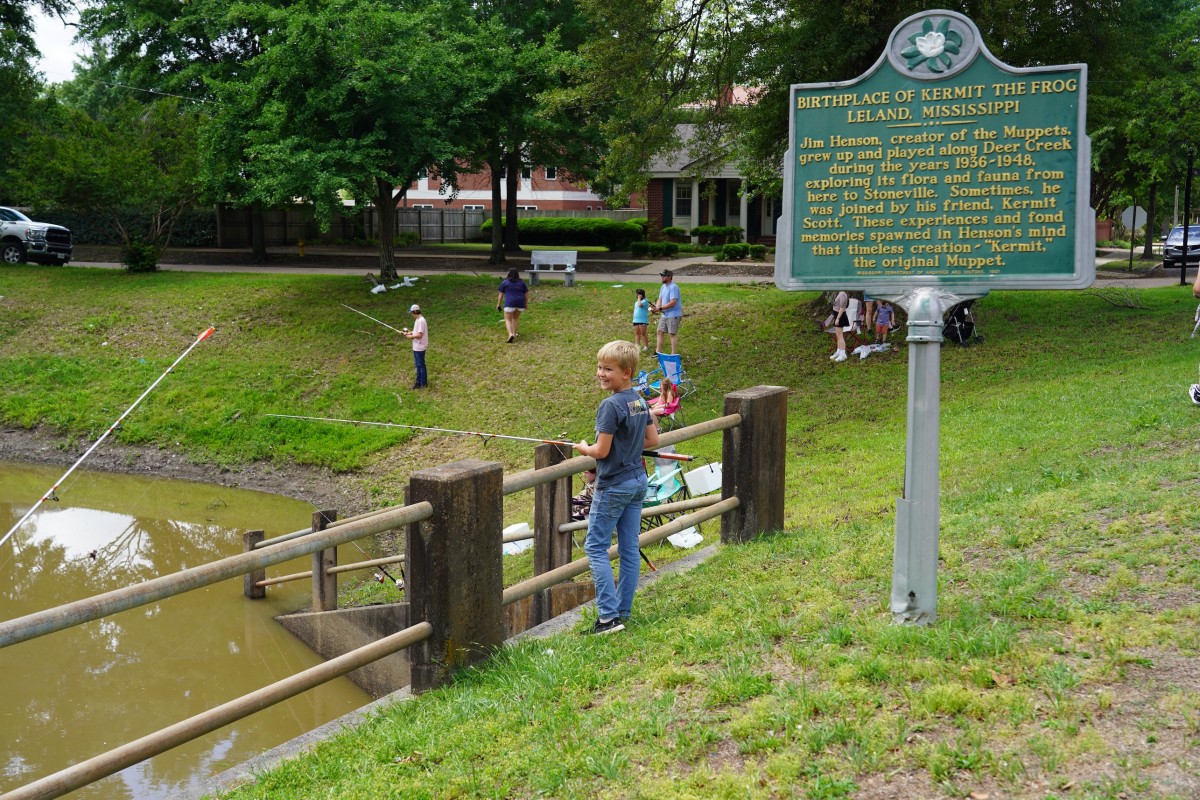
The story of Washington County begins before recorded history with the indigenous mound builders; our storytellers, musical and literary, have defined modern American culture. Today, residents and visitors from across the nation experience our great American stories every day, from a Native American burial mound to blues history and blues music, from literature and art to richly historic architecture and some of the world’s most beautiful outdoor settings and recreation. Both Kermit the Frog and the American teddy bear had their origins here. Learn more and discover.


In a county with a storied literary heritage, learning is valued—and valuable.
In a county that has produced over 100 published writers, including a Pulitzer Prize winner and notable entertainment figures like Muppets creator Jim Henson, learning isn’t just about happy endings—it’s also about great beginnings and lifelong success. So while choice and quality make today’s P-12 schools a solid foundation for career and college readiness, higher education opportunities here and nearby mean residents never have to say “the end” to their education—lifelong learning is available and convenient at multiple highly-rated institutions.
P-12: Over 125 years of excellence. Lots of choice and low student-teacher ratios make Washington County schools a great launching pad for today’s students ready to become tomorrow’s leaders. In the county’s 23 public schools, student-teacher ratios average 16:1, while the private schools average 9:1.
Local employers rely on Mississippi Delta Community College (MDCC) for world-class workforce training, while local residents know MDCC as a strategic resource for seamless academic and vocational preparation, allowing students to complete career track training for immediate employment or earn two-year transferrable academic degrees, right here in Greenville, MS. Technical career paths taught at MDCC Greenville Campus include Agriculture, Food and Natural Resources; Business Management and Admin; Manufacturing; Hospitality and Tourism; Information Technology; Automotive; and Architecture and Construction. Health Science, Adult Education, Law Enforcement, and CEU courses are just a few other paths to success they offer. To explore the full list of educational opportunities, click here.
Delta State University (DSU): Great performance. While it began as a teacher’s college in the 1920s and continues to lead in teacher preparation, DSU has steadily and meticulously expanded its offerings to encompass 42 majors, including Commercial Aviation and a nationally recognized Geospatial Information Technology program. At DSU 4,000 students from all 50 states and 20 foreign countries are preparing to meet global challenges. An added benefit for Washington County: DSU’s Cleveland location puts the University’s arts offerings—like the nationally acclaimed performances at the Bologna Arts Center—less than 45 minutes away.
Mississippi State University (MSU): Fielding dreams. Although recently MSU has made some big waves on the football field, the school has long dominated academic fields, earning the Carnegie Foundation’s designation as a comprehensive doctoral university with Very High Research Activity. Begun as an agricultural and engineering school, MSU now offers baccalaureate through doctoral degrees at a dozen colleges and schools, including the College of Veterinary Medicine and the College of Art, Architecture and Design. MSU football action is exciting, but Bulldogs baseball is also big hit, drawing crowds from all over the state.
University of Mississippi—“Ole Miss”: Ole Miss may have been the site of the first U.S. Presidential debate of 2008, but there’s no arguing about the quality of a school heading toward its second centennial and turning out Rhodes, Goldwater and Truman scholars on a regular basis. The Oxford campus is home to 11 degree granting divisions, including schools of law and pharmacy. (The University’s schools of medicine, nursing and healthcare sciences are located in Jackson.) Ole Miss is also a popular sports destination for Washington County residents ready to cheer powerhouse SEC athletic teams.
Quality health care is an indicator of excellence in any community. Washington County’s first-rate providers, facilities, and programs deliver compassionate care at every phase of life. Washington County is home to a variety of healthcare practices that provide our citizens with convenience and choice when they matter most.

Leading Washington County’s reputation for quality healthcare is Delta Health System. DHS has been serving the tri-state Delta region for over 66 years with the mission of providing high quality medical services to the citizens and communities served. With over 800 highly skilled and professional employees, DHS is the largest employer in Washington County and is an economic engine for the Delta Region.
Emergency room services are available on a 24-hour per day, seven-day per week basis.

Delta Health Alliance is a non-profit, tax-exempt organization that is changing health care and education in the Mississippi Delta by improving access to health services, promoting healthier lifestyles, and expanding educational opportunities.
Services and programs for Washington County include:
Deer Creek promise Community, Delta C.A.R.E.S., Catch PE, College Promise Initiative, Delta BLUES diabetes Initiative, Delta Careers Collaborative, Delta Futures 3, Delta Opioid Initiative, Produce Rx, Delta Resources and Referral Centers, Delta Safe Families Collaborative, Delta Strong Initiate, Delta Wellness Center, Financial Literacy, G.R.E.A.T., Dolly Parton Imagination Library, Delta LEADS, Leland Medical Clinic, Life Skills Training, LINKS, Promise Community Literacy Fellows, Mississippi RIVER, NEW YOU Collaborative, Parents as Teachers, SPARK, Mobile Medical Clinic, TORCH, Watch D.O.G.S., Delta WORC, and Youth Council.

For more than 50 years Delta Health Center, Inc. (DHC) has provided health care for some of the most vulnerable communities in the Mississippi Delta. With a grant from the federal Office of Economic Opportunity, Delta Health Center was established in 1965 in the historic all African American town of Mound Bayou, Mississippi. Delta Health Center has the historic distinction of being the first rural Community Health Center and the first Federally Qualified Community Health Center in the United States.
Delta Health Center continues to fill critical gaps in health care by serving and empowering more than 10,383 individuals and families who might otherwise have no access to health care services. Delta Health Center’s success has led to the establishment of 1,300 community health centers which serve as the primary medical home for more than 28 million people in over 11,000 rural and urban communities across America.
The roll call of famed Washington County blues musicians is long: Charley Patton, Son Thomas, Sam Chatmon, Jimmy Reed, Johnny Winter and Prince McCoy, and today more than a dozen markers on the Mississippi Blues Trail Markers share their history. Visit Charlie Patton’s grave, see where Freedom Village hosted the first Mississippi Delta Blues Festival and where Ruby Edwards operated her famed Ruby’s Nite Spot. Take Greenville’s Blues Walk, or sample live music in the clubs on historic Walnut Street where the blues live on, vibrantly.
From blues to art to literature, from the birthplace of Kermit the Frog to a magnificent traditional carousel to the seven historical museums: The “Museum Mile” is an experience that residents and visitors enjoy again and again. With so many stories to tell, it’s no wonder Greenville has been home to 100 published writers, including Hodding Carter, William Alexander Percy, Walker Percy and Shelby Foote.
Greenville is a popular destination on the iconic Great River Road Historic Byway of the Mississippi River. The Great River Road is the oldest, longest and many would argue the most fascinating of America’s scenic byways, and the River Road Queen Welcome Center offers a royal welcome to the Washington County experience. The structure originally served the state’s exhibit at the 1984 World’s Fair in New Orleans, and now it’s an excellent first stop for an exploration of this region’s cultural heritage.
In 1902, President Theodore Roosevelt arrived in Mississippi to hunt Louisiana black bear, with Holt Collier, the famed African American cowboy, hunter and tracker hired on as guide. When a bear was located and rendered incapacitated, Roosevelt refused to shoot it, and the story of “Teddy’s bears” became the stuff of legend and childhood companions. Today, two national wildlife refuges are places for birds and possibly for bears in the future. The 1,400-acre Holt Collier National Wildlife Refuge, the only NWR to be named in honor of an African American, was created to provide a habitat for 250 species of songbirds and also for reforestation, which may eventually provide habitat for the return of the black bear. In the meantime, sportsman can hunt rabbit and deer during annual muzzle loading and archery hunts. While the Theodore Roosevelt National Wildlife Refuge is not yet open to the public, the collaboratively developed wetlands have created such a large dense flyover that the National Audubon Society’s annual bird counts have identified more avian species in Washington County than in any other U.S. inland location.
Washington County shares and celebrates its culture all year long. Festival highlights include:
- Mississippi Wildlife Heritage Festival
- Christmas on Deer Creek
- Mardi Gras Parade & Block Party
- Mississippi Delta Blues and Heritage Festival
- Delta Hot Tamale Festival
Now a landmark name in dining that’s spread beyond Greenville, the legendary steakhouse Doe’s Eat Place began as a small family business with a recipe for hot tamales. Tamales are still a hot item at Doe’s and at other Greenville locations on the Mississippi Delta Hot Tamale Trail.